Colostrum and Gut Health: What the Science Actually Says
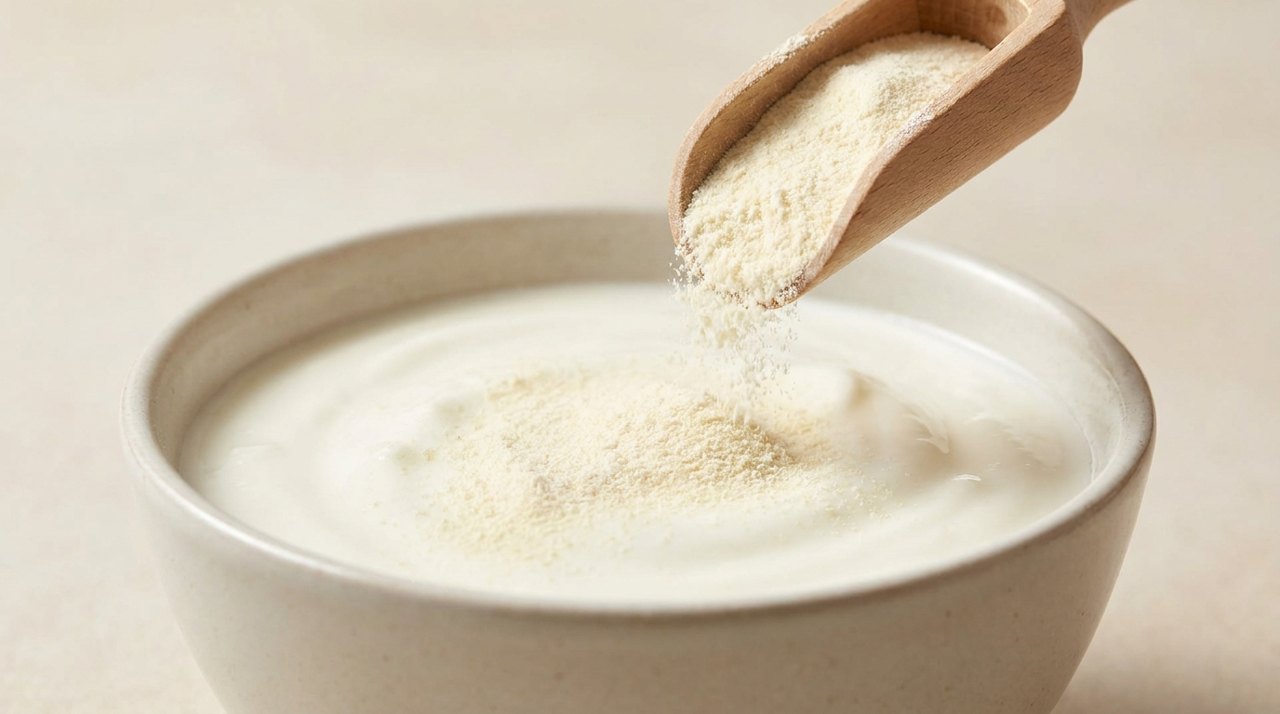
Short answer: bovine colostrum may help support the gut lining, but the evidence is still early. In small randomized trials, taking colostrum for 14–20 days blunted the rise in intestinal permeability caused by heavy exercise and by an NSAID painkiller. It has not been shown to treat any digestive disease, so treat it as a possible supporting player for gut health, not a fix.
- What is in it: colostrum is rich in immunoglobulins (mostly IgG), lactoferrin and growth factors. These mostly act inside the gut and are not absorbed whole.
- Best human evidence: exercise-related gut permeability. Several small crossover trials (8–18 people, usually 20 g/day for 14 days) found a smaller rise in "leakiness" after hard exercise.
- NSAID study: in 7 healthy volunteers, colostrum prevented the roughly 3-fold rise in gut permeability seen with indomethacin plus a whey control.
- Thin evidence: human data on IBS, "leaky gut" as a diagnosis and changes to the microbiome are limited.
- How to try it: take a consistent daily dose for 2–4 weeks and track how you feel. Skip it if you have a milk allergy.
How colostrum could affect the gut
Colostrum is the first milk a cow produces after calving. A newborn calf's gut is immature, and colostrum is built to protect and develop it. That is why the main components of colostrum are all molecules that act in the digestive tract. Bovine colostrum also contains a trypsin inhibitor, which researchers think helps shield its proteins from being broken down too quickly in the gut (Playford & Weiser, 2021).
| Component | Bovine colostrum vs mature milk | Proposed role in the gut | Learn more |
|---|---|---|---|
| Immunoglobulins (mainly IgG) | 42–90 mg/mL total immunoglobulin vs 0.4–0.9 mg/mL | Bind microbes and toxins in the gut, rather than being absorbed | IgG explained |
| Lactoferrin | 1.5–5 g/L vs 0.02–0.75 g/L | Binds iron and has antimicrobial activity in lab studies | Lactoferrin |
| Growth factors (IGF-I, TGF-β, EGF) | IGF-I about 341 µg/L vs 15 µg/L | Signal epithelial repair in cell and animal studies | Growth factors |
| Proline-rich polypeptides | Not standardized on labels | Immune signaling, mostly studied in the lab | PRPs |
| Oligosaccharides | Small amounts | Possible food for beneficial bacteria (prebiotic-like) | Composition |
Values from Playford & Weiser (2021) and Godden et al. (2019). Liquid colostrum figures; powders vary with processing.
These are plausible mechanisms, not proof of effects. Most of the mechanistic data come from cell cultures and animals. The human studies below are the part that matters for a supplement decision.
Gut permeability: what the trials measured
The gut lining is a single layer of cells held together by "tight junctions." It lets nutrients through and keeps most bacteria and toxins out. When the barrier loosens, more of what is in the gut can cross into the body. Researchers measure this with a sugar test. You drink two sugars, one that normally crosses the lining easily (rhamnose or mannitol) and one that should barely cross (lactulose). Then the ratio of the two is measured in urine. A higher lactulose ratio means a "leakier" gut. Some studies also measure I-FABP, a blood marker of damage to gut cells.
Hard exercise, especially in the heat, reliably increases permeability for a few hours. So do NSAID painkillers. That makes these two settings useful test cases, and they are where nearly all the human colostrum data come from.
| Study | Who | Colostrum dose | Main finding |
|---|---|---|---|
| Playford et al., 2001 | 7 healthy men taking indomethacin (an NSAID) for 5 days | 125 mL three times daily vs whey control | Permeability rose about 3-fold on control (0.36 to 1.17) but did not rise significantly with colostrum. No effect in 15 patients already on long-term NSAIDs. |
| Marchbank et al., 2011 | 12 volunteers, standardized heavy exercise | 14 days, colostrum vs placebo | Placebo: 2.5-fold rise after exercise. Colostrum cut the rise by about 80%. |
| Davison et al., 2016 | 8 volunteers, exercise raising body temperature 2 °C | 14 days of colostrum, zinc carnosine, or both | 3-fold rise on placebo. Colostrum or zinc carnosine alone cut it by about 70%, and the combination did slightly better. |
| March et al., 2017 | 18 men, exercise | 20 g/day for 14 days | Sugar ratio rose to 273% of baseline on placebo vs 148% on colostrum. I-FABP rose on placebo (191%) but not on colostrum (107%). |
| March et al., 2019 | 12 men, 60 min running at 30 °C | 20 g/day for 14 days | Smaller rise in I-FABP (311% vs 407% of baseline). The pattern of gut bacterial DNA in blood was unchanged. |
| Hałasa et al., 2017 | 16 athletes in peak training | 500 mg/day for 20 days vs whey | Lactulose/mannitol ratio and stool zonulin fell compared with placebo. |
The results point in the same direction, which is encouraging. Still, read them carefully:
- The studies are tiny. Most included 7–18 people and lasted two to three weeks.
- Many share authors. Several trials came from overlapping research groups, and some authors disclosed past funding from a colostrum supplier. Independent replication is limited.
- They measure markers, not symptoms. A lower sugar ratio is a lab result. None of the trials showed fewer stomach cramps, better digestion or fewer illnesses as a main outcome.
- The settings are specific. Healthy young athletes under heat or exercise stress may respond differently from someone with everyday bloating.
A fair reading is "colostrum may help the gut barrier hold up under short-term stress." "Colostrum heals a leaky gut" goes beyond the data. Our colostrum and leaky gut guide covers the leaky-gut concept in more depth.
IBS, diarrhea, constipation and histamine
IBS
Recent reviews list irritable bowel syndrome among the areas being explored for colostrum, alongside NSAID-related gut injury and inflammatory bowel disease (Karakülah et al., 2025). The human IBS data are mostly small and preliminary, though. There is no basis to treat colostrum as an IBS therapy. IBS needs a proper diagnosis, and the first-line approaches (diet, fiber, stress management and medication where needed) have far more evidence. We summarize what exists in colostrum for IBS.
Diarrhea
A 2019 meta-analysis pooled five randomized trials of colostrum products in children with infectious diarrhea and found fewer stools per day and fewer pathogens detected (Li et al., 2019). These were clinical studies of specific products in a medical setting, not evidence for self-treating diarrhea at home. Diarrhea in children, or diarrhea that lasts more than a couple of days, needs medical advice.
Side effects: loose stools, bloating or constipation
In the trials, colostrum was generally well tolerated. Some people still notice bloating, gas, loose stools or firmer stools in the first week, especially at large doses. Colostrum contains less lactose than regular milk (about 2.7% vs 5.0% in liquid first-milking colostrum), but it is not lactose-free. Starting with a smaller dose usually helps. See can colostrum cause diarrhea or constipation for practical fixes.
Histamine sensitivity
Some people who react to histamine-rich or fermented foods ask whether colostrum is a problem. The research on this is very limited. If you are sensitive, start low and watch for flushing, headaches or gut upset. Our colostrum and histamine page explains what is and is not known.
Colostrum vs probiotics and fiber
Colostrum often gets grouped with probiotics, but it works differently. Probiotics add live bacteria. Fiber feeds the bacteria you already have. Colostrum supplies proteins that act on the gut lining and on microbes in the gut.
| Colostrum | Probiotics | Fiber / prebiotics | |
|---|---|---|---|
| What it is | Early cow's milk rich in antibodies, lactoferrin and growth factors | Live bacteria or yeasts | Fermentable carbohydrates |
| Main proposed action | Supports the barrier; binds microbes and toxins in the gut | Adds specific strains, usually temporarily | Feeds resident bacteria, which produce short-chain fatty acids |
| Best-studied gut context | Exercise- and NSAID-related permeability (small trials) | Depends entirely on the strain | Regularity and overall diet quality |
| Dairy-free? | No | Usually | Yes |
| Can be combined? | Yes. Some people take colostrum alongside a probiotic or a fiber supplement, and there is no known reason to avoid the combination. | ||
If your main issue is irregularity, fiber is the stronger first step. If you train hard and get gut trouble during long sessions, colostrum has the most specific evidence. Our colostrum vs probiotics guide walks through the choice.
How to try colostrum for gut support
- Pick a dose and stick to it. Gut studies used anything from 500 mg/day (Hałasa) to 20 g/day (March, Davison). A typical serving of a few grams of powder sits between those. Consistency matters more than the exact number. See how much colostrum per day.
- Give it 2–4 weeks. The permeability trials ran for 14–20 days. If you notice nothing after a month of daily use, that is useful information too.
- Choose a product with a stated IgG %. IgG is the standard marker of colostrum quality. Our IgG percentage guide shows how to compare products by grams of IgG per serving.
- Keep a simple log. Note bloating, stool pattern and energy for a week before you start and while you take it. Without a baseline, it is hard to tell a real change from a good week.
- Keep the basics first. Fiber, varied whole foods, hydration, sleep and stress management do more for most people's digestion than any single supplement.
Who should skip it or ask first: anyone with a cow's milk allergy (colostrum is a dairy product). Also check with a healthcare provider if you are pregnant, take regular medication, or have a diagnosed digestive condition. Symptoms such as blood in the stool, unexplained weight loss, ongoing pain or night-time diarrhea need a doctor, not a supplement. More in who should not take colostrum.
What the evidence does not show
- It does not show that colostrum treats, cures or prevents any digestive disease, including IBS, IBD or food intolerances.
- It does not show reliable changes to the gut microbiome in people. A major review describes the human evidence on this as less clear (Playford & Weiser, 2021).
- It does not show dramatic or universal results. Responses vary, and many people notice nothing.
- It does not show that whole antibodies or growth factors reach the bloodstream in meaningful amounts. Any effect most likely happens inside the gut.
Bottom line: colostrum is a biologically plausible gut supplement, with small but consistent trials showing less exercise- and NSAID-related permeability. It is a reasonable, low-risk thing to try for a few weeks if you tolerate dairy. Keep your expectations modest and the fundamentals first.
Frequently asked questions
Is colostrum good for gut health?
It may help. Small randomized trials found that 14–20 days of bovine colostrum reduced the rise in gut permeability caused by hard exercise or an NSAID painkiller. The studies are small and measured lab markers rather than symptoms, so the evidence is promising but early.
Does colostrum help leaky gut?
In athletes and volunteers under exercise or NSAID stress, colostrum lowered markers of intestinal permeability compared with placebo. "Leaky gut" is not a recognized diagnosis on its own, and no study shows colostrum heals it. A fair summary is that it may support the gut barrier under short-term stress.
How long does colostrum take to work for the gut?
The gut permeability trials gave colostrum for 14 to 20 days before testing. Plan on at least 2–4 weeks of consistent daily use before judging whether it helps you.
How much colostrum should I take for gut health?
Studies used between 500 mg and 20 g per day. Most people follow the product's serving size, often a few grams of powder daily, and start lower if they have a sensitive stomach.
Can colostrum upset your stomach?
It is generally well tolerated, but some people get bloating, gas, loose stools or constipation in the first week, especially at high doses. Reducing the dose or taking it with food usually helps. Avoid it if you have a milk allergy.
Is colostrum better than probiotics for gut health?
They do different things. Probiotics add live bacteria and their effects depend on the strain, while colostrum supplies antibodies, lactoferrin and growth factors that act on the gut lining. They can be taken together.
Does colostrum change the gut microbiome?
Possibly, but it is not well shown in people. Lab and animal studies suggest effects on gut bacteria, while human trial evidence for significant microbiome changes is still unclear.
Sources
- Playford RJ, Weiser MJ. Bovine Colostrum: Its Constituents and Uses. Nutrients. 2021;13(1):265. PMC7831509
- Playford RJ, MacDonald CE, Calnan DP, et al. Co-administration of the health food supplement, bovine colostrum, reduces the acute non-steroidal anti-inflammatory drug-induced increase in intestinal permeability. Clinical Science. 2001;100(6):627–633. PubMed 11352778
- Marchbank T, Davison G, Oakes JR, et al. The nutriceutical bovine colostrum truncates the increase in gut permeability caused by heavy exercise in athletes. American Journal of Physiology – Gastrointestinal and Liver Physiology. 2011;300(3):G477–G484. PubMed 21148400
- Davison G, Marchbank T, March DS, Thatcher R, Playford RJ. Zinc carnosine works with bovine colostrum in truncating heavy exercise-induced increase in gut permeability in healthy volunteers. American Journal of Clinical Nutrition. 2016;104(2):526–536. PubMed 27357095
- March DS, Marchbank T, Playford RJ, et al. Intestinal fatty acid-binding protein and gut permeability responses to exercise. European Journal of Applied Physiology. 2017;117(5):931–941. PMC5388720
- March DS, Jones AW, Thatcher R, Davison G. The effect of bovine colostrum supplementation on intestinal injury and circulating intestinal bacterial DNA following exercise in the heat. European Journal of Nutrition. 2019;58(4):1441–1451. PMC6561991
- Hałasa M, Maciejewska D, Baśkiewicz-Hałasa M, et al. Oral Supplementation with Bovine Colostrum Decreases Intestinal Permeability and Stool Concentrations of Zonulin in Athletes. Nutrients. 2017;9(4):370. PMC5409709
- Li J, Xu YW, Jiang JJ, Song QK. Bovine colostrum and product intervention associated with relief of childhood infectious diarrhea. Scientific Reports. 2019;9:3093. PMC6395637
- Karakülah YS, Yalçıntaş YM, Bechelany M, Karav S. Clinical Applications of Bovine Colostrum in Gastrointestinal Disorders: Mechanisms, Evidence, and Therapeutic Potential. International Journal of Molecular Sciences. 2025;26(21):10673. PMC12608013
- Godden SM, Lombard JE, Woolums AR. Colostrum Management for Dairy Calves. Veterinary Clinics of North America: Food Animal Practice. 2019;35(3):535–556. PMC7125574