How to Take Colostrum Capsules: How Many, When, and What to Check on the Label
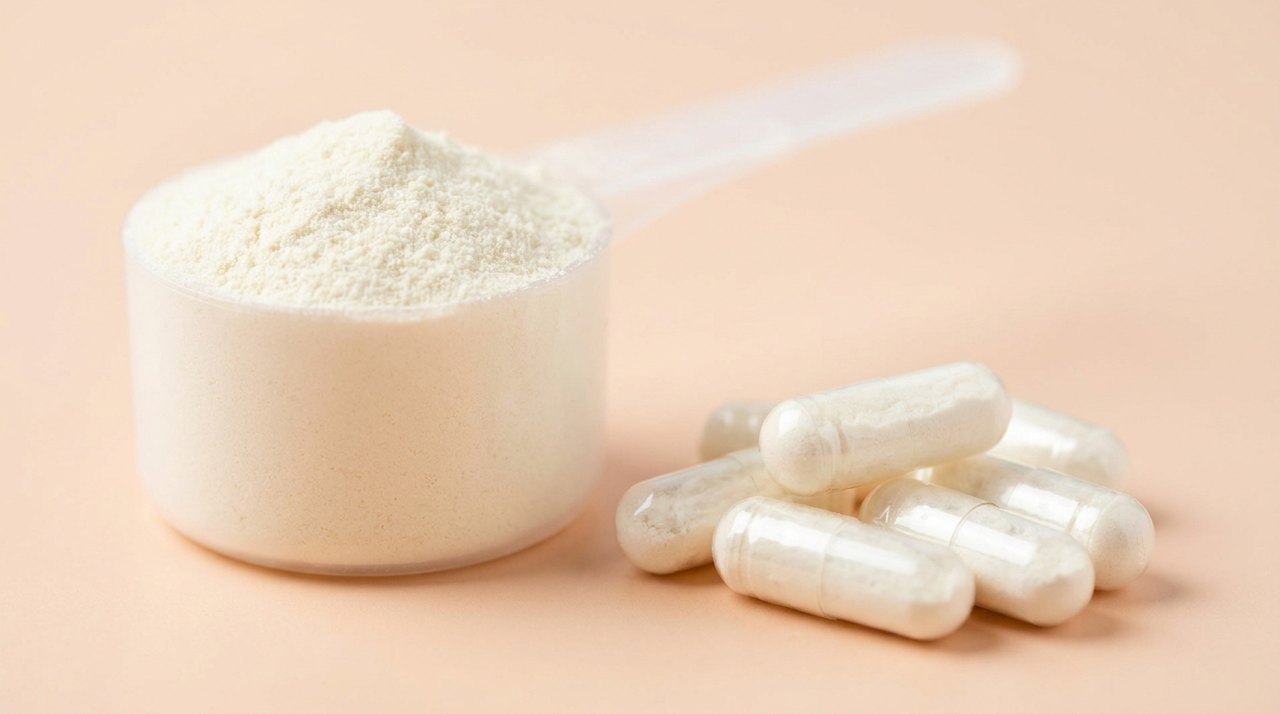
Most colostrum capsules contain 400–500 mg each, and labels typically recommend 2–4 capsules a day (about 1–2 g), usually taken on an empty stomach with water. Research doses are much higher: most clinical and sports studies used 10–20 g of colostrum powder per day, which would be 20–50 capsules. So before choosing a dose, decide whether you want the label's maintenance amount or something closer to what was studied, then check the label for milligrams per capsule, IgG percentage, and what the shell is made of.
Key takeaways
- A typical capsule holds 400–500 mg of colostrum. The usual label dose of 2–4 capsules provides roughly 0.8–2 g a day.
- Many human studies used 10–60 g a day, and 20 g was common. That much is hard to reach with capsules. Powder is more practical at those levels.
- Timing advice such as "empty stomach" or "30 minutes before a meal" makes sense in theory, but there is little direct evidence for it.
- On the label, check mg per capsule, servings per container, IgG % (or mg of IgG per serving), the capsule shell material, and third-party testing.
- Colostrum is a dietary supplement. It is not a treatment for any disease.
How many colostrum capsules should you take?
Start with the manufacturer's serving size, then convert it to grams so you can compare products and studies. The calculation is: capsules per day × mg per capsule ÷ 1,000 = grams per day.
Label doses vs. research doses
Most consumer products suggest 1–2 g a day. The research mostly used more. A 2021 review in Nutrients by Playford and Weiser described common study doses of roughly 10–20 g a day, sometimes up to 60 g. A meta-analysis on upper respiratory symptoms in exercising adults pooled trials that mostly used 10–20 g a day. Few published trials tested 1–2 g, so whether label-level doses produce the effects seen in studies is mostly unknown.
| Daily target | Capsules (500 mg) | Approx. IgG at 25% IgG | Approx. kcal | Practical note |
|---|---|---|---|---|
| 1 g (typical label) | 2 | 250 mg | ~4 | Easy to take; little direct trial evidence at this dose |
| 2 g (upper label range) | 4 | 500 mg | ~8 | Common "maintenance" serving |
| 5 g | 10 | 1,250 mg | ~20 | Possible, but a 60-count bottle lasts 6 days |
| 10 g (lower research range) | 20 | 2,500 mg | ~40 | Powder is usually more practical and cheaper |
| 20 g (common research dose) | 40 | 5,000 mg | ~80 | Not realistic with capsules for most people |
Calorie estimates assume about 4 kcal per gram, which is typical for a protein-rich dairy powder. Actual values vary by product.
A sensible way to start
- Take the label dose (often 2 capsules) for the first week to see how your stomach handles it.
- If you tolerate it well and want a higher intake, increase gradually, for example by 1–2 capsules every few days. Stay within amounts you've discussed with a healthcare professional if you have a medical condition.
- If you plan to take 5 g a day or more, compare the cost against powder. See our powder vs. capsules comparison.
For general dosing ranges and who should be cautious, see our dosage and safety guide.
Shopping for colostrum? Our own brand is BIOMIXA grass-fed colostrum powder, direct from the maker.
When to take colostrum capsules
Empty stomach or with food?
Many brands recommend taking capsules on an empty stomach, either in the morning or 20–30 minutes before a meal. The reasoning is that less stomach acid and fewer digestive enzymes may let more intact immunoglobulins and growth factors reach the intestine. That is plausible, and some lab work suggests colostrum proteins partly resist digestion. However, no good human trials have compared empty-stomach dosing with dosing at meals. If capsules on an empty stomach cause nausea or bloating, taking them with a light meal is a reasonable compromise.
Morning, evening, or split doses?
There is no established best time of day. If you take 4 or more capsules, splitting them (for example, half in the morning and half in the evening) may be easier on digestion and easier to remember. Being consistent probably matters more than the exact timing.
Around exercise
In sports studies, participants usually took colostrum daily for several weeks rather than right before a workout. One example is the gut-permeability research by Marchbank and colleagues, which used 20 g a day for 14 days. If exercise is your reason for taking it, think of colostrum as a daily habit over weeks, not a pre-workout dose.
How long to take it
Most trials ran for 2 to 12 weeks. Data on use beyond a few months are limited. Some people take a break periodically to judge whether they notice any difference.
What to check on the label
Capsule labels vary a lot in how much they tell you. These are the details that matter most.
1. Milligrams per capsule and per serving
Look for both numbers. A bottle labelled "1,000 mg" may mean 1,000 mg per serving of 2 capsules, not per capsule. Divide the price by the total grams in the bottle (capsules × mg ÷ 1,000) to get a cost per gram you can compare across brands.
2. IgG percentage or IgG per serving
Immunoglobulin G (IgG) is the most commonly standardized marker in bovine colostrum. Commercial powders often state 15–40% IgG, though testing methods differ, and a higher number is not automatically better. A label that lists mg of IgG per serving is more useful than one that only gives a percentage. If no IgG figure appears at all, treat that as a minor red flag. For more detail, read our IgG percentage guide.
3. Capsule shell and other ingredients
- Gelatin capsules are usually made from bovine or porcine sources. They are not suitable for vegetarians and may matter for religious diets.
- HPMC (hypromellose) capsules are plant-based. Note that the colostrum inside is still a dairy product.
- Fillers and flow agents such as rice flour, magnesium stearate, or silicon dioxide are common in small amounts. Fewer extra ingredients make the contents easier to evaluate.
4. Source and collection
Check the country of origin and whether the colostrum comes from the first milkings, ideally within 24–48 hours of calving. Some labels mention pasture-raised or grass-fed herds, or rBST-free sourcing. These claims are hard to verify yourself, so third-party certification adds credibility.
5. Processing and testing
Low-temperature pasteurization and gentle drying are often marketed as protecting bioactive proteins. Look for evidence of testing for microbial contamination and antibiotic residues, a certificate of analysis on request, or certifications such as NSF Certified for Sport or Informed Sport if you compete in tested sport.
6. Allergens and lactose
Colostrum is a dairy product. It contains milk proteins and some lactose, and lactose levels vary by product. People with a cow's milk protein allergy should avoid it. People with lactose intolerance may tolerate small capsule doses but should start low.
For side-by-side comparisons of products and price per gram, see our colostrum brands comparison.
Common mistakes
- Assuming capsules match study doses. Two capsules usually provide around 5–10% of what most trials used.
- Comparing products by price per bottle. Compare price per gram, and if possible, price per gram of IgG.
- Opening capsules into hot drinks. If you empty capsules into food or drink, use something cool or lukewarm, because high heat may denature some proteins.
- Expecting quick, dramatic effects. Studied outcomes are generally modest and appeared over weeks. Some studies found no meaningful effect.
FAQ
Can I open colostrum capsules and mix the powder into food?
Yes. Most capsules contain plain colostrum powder, so you can open them and stir the contents into yogurt, a smoothie, or a cool drink. This helps if you have trouble swallowing pills. Avoid very hot liquids, which may degrade some heat-sensitive proteins. The taste is mildly milky. If you open many capsules every day, switching to powder is usually cheaper.
Is it safe to take more capsules than the label says?
Studies have generally used doses well above typical label amounts, often 10–20 g a day, and mostly reported mild side effects such as bloating or nausea. That does not guarantee higher doses are right for everyone. If you are pregnant, breastfeeding, have a medical condition, or take medication, check with a healthcare professional before going beyond the label.
Do colostrum capsules break the fast?
Technically, yes, for a strict fast. A 500 mg capsule provides about 2 kcal and some protein, so 2–4 capsules add roughly 4–8 kcal. Many people following time-restricted eating consider that negligible. If your fasting goal depends on taking in zero calories or zero protein, take capsules during your eating window instead.
Are capsules or powder better?
Neither is better in general. Capsules are convenient, have no taste, and make it easy to take the same small dose every day. Powder is more practical and usually cheaper per gram if you want doses near the 10–20 g a day used in many studies. Choose based on your target dose, budget, and whether you mind mixing a drink.
Sources
- Playford RJ, Weiser MJ. Bovine colostrum: its constituents and uses. Nutrients. 2021;13(1):265.
- Jones AW, March DS, Curtis F, Bridle C. Bovine colostrum supplementation and upper respiratory symptoms during exercise training: a systematic review and meta-analysis of randomised controlled trials. BMC Sports Science, Medicine and Rehabilitation. 2016;8:21.
- Marchbank T, Davison G, Oakes JR, et al. The nutriceutical bovine colostrum truncates the increase in gut permeability caused by heavy exercise in athletes. American Journal of Physiology – Gastrointestinal and Liver Physiology. 2011;300(3):G477–G484.
- Rathe M, Müller K, Sangild PT, Husby S. Clinical applications of bovine colostrum therapy: a systematic review. Nutrition Reviews. 2014;72(4):237–254.
- Davison G, Marchbank T, March DS, Thatcher R, Playford RJ. Zinc carnosine works with bovine colostrum in truncating heavy exercise–induced increase in gut permeability in healthy volunteers. American Journal of Clinical Nutrition. 2016;104(2):526–536.
BIOMIXA Bluegrass Colostrum
A single-ingredient, grass-fed, unflavored colostrum powder (stated IgG of at least 25%) from the team behind this site. See how it compares in our 9-brand price and IgG comparison. Sold direct by the maker at biomixa.com.
Disclosure: BIOMIXA is our own brand — this site is run by the makers of BIOMIXA colostrum. We also earn a commission on Amazon purchases. Full disclosure.