Can You Take Too Much Colostrum? Overdose, Upper Limits, and What Happens
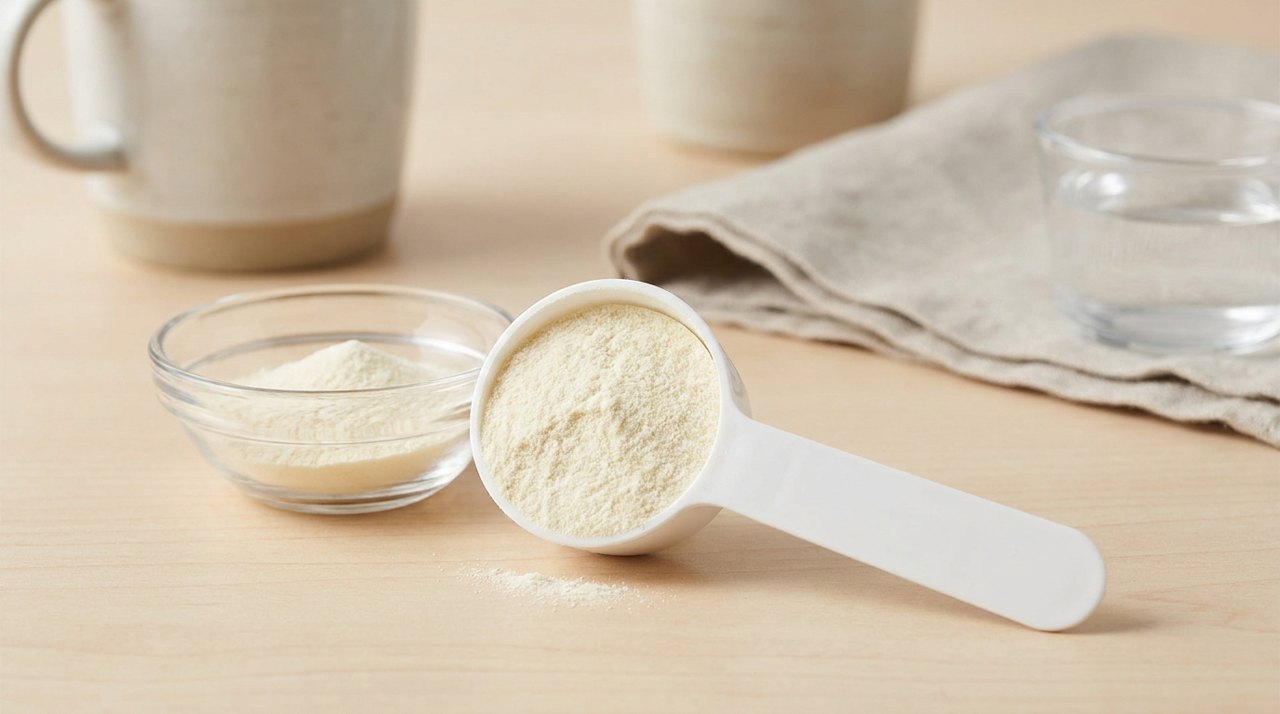
Bovine colostrum is a food, not a drug, so it has no official "overdose" threshold the way a vitamin or a medication does. That does not mean more is always better. Clinical trials have used anywhere from half a gram to 60 grams per day, and the side effects that do show up at the top of that range are mostly digestive, caloric, and financial rather than toxic. This article walks through what the research actually tested, where the practical ceiling sits, and what tends to happen when people push past a sensible serving.
- No tolerable upper intake level exists for bovine colostrum. No regulator has set one, and no human trial has reported a toxic dose.
- Studies have used up to 60 g/day for 8 weeks in adults with no serious adverse events reported, though those trials were small.
- The realistic "too much" is digestive: bloating, loose stools, nausea, and lactose-related symptoms are the most common complaints at high servings.
- Calories and protein add up. A 60 g serving delivers roughly 220 to 240 kcal and 30 to 45 g of protein, which matters if you are tracking intake.
- Benefits appear to plateau around 10 to 20 g/day in most exercise and gut-permeability studies, so megadosing has little evidence behind it.
Is there an official upper limit for colostrum?
No. Tolerable Upper Intake Levels (ULs) exist for nutrients like vitamin D or zinc because there is a documented dose at which harm begins. Bovine colostrum is classified as a dietary supplement or dairy-based food ingredient in the United States, the European Union, and most other markets, and no authority has defined a UL for it. That reflects two things: first, colostrum is essentially concentrated early milk, and second, no controlled human study has identified a dose associated with toxicity.
The absence of a limit is not proof of safety at any amount. It mostly reflects that nobody has tested extreme intakes, because there has been no reason to. A 2014 systematic review in Nutrition Reviews summarised dozens of trials and noted that adverse events were rare and generally mild, but it also pointed out that most studies were short and modest in size. If you want a baseline on servings before reading about the upper end, our dosage and safety guide covers typical label recommendations.
What doses have actually been studied?
Research doses vary by more than a hundredfold, which is unusual for a supplement. The table below groups the ranges that appear in the literature and estimates what each delivers, assuming a standard skim colostrum powder with about 20 percent IgG and roughly 3.7 to 4 kcal per gram. Products vary, so check your own label.
| Daily amount | Where it appears | Approx. IgG (at 20%) | Approx. kcal | Approx. lactose | What is known |
|---|---|---|---|---|---|
| 0.5 to 2 g | Most capsule products; many "daily wellness" powders | 0.1 to 0.4 g | 2 to 8 | Under 0.5 g | Well tolerated; few trials at this level, so effects are least documented |
| 5 to 10 g | Common powder serving; several gut and immune studies | 1 to 2 g | 20 to 40 | 1 to 2.5 g | Good tolerability; some evidence for supporting gut barrier markers during exercise |
| 20 g | Gut permeability trials (Marchbank 2011; Davison 2016); body composition study (Antonio 2001) | 4 g | 75 to 80 | 2 to 5 g | Most-studied "active" dose; mild GI symptoms reported in some participants |
| 60 g | Australian athlete studies (Buckley 2002; Brinkworth 2003) | 12 g | 220 to 240 | 6 to 15 g | No serious adverse events in 8-week trials; caloric and lactose load becomes meaningful |
Two points stand out. First, the 60 g/day trials from the University of South Australia group were tolerated for eight weeks, but the participants were healthy, trained adults, and the sample sizes were small (often under 40 people). Second, the trials that measured gut permeability found effects at 20 g/day, and nobody has shown that tripling that dose does anything extra. The dose-response curve above 20 g is simply unmapped.
Shopping for colostrum? Our own brand is BIOMIXA grass-fed colostrum powder, direct from the maker.
What happens if you take too much?
Because colostrum is a dairy product, "too much" tends to look like too much dairy. The symptoms below are the ones most often reported in trial adverse-event logs and in consumer feedback.
Digestive discomfort
Bloating, gas, loose stools, and mild nausea are the most common complaints at servings above about 20 g. Colostrum powder contains lactose, though usually less than regular milk powder, and it also contains oligosaccharides and growth factors that may alter gut motility in some people. Symptoms usually appear within a day or two of increasing the dose and resolve when the dose is reduced.
Lactose-related symptoms
Whole colostrum powder can be 10 to 25 percent lactose by weight. At 10 g that is a trivial 1 to 2.5 g, less than a splash of milk. At 60 g it can reach 15 g, roughly the lactose in a full glass of milk, which is enough to trigger symptoms in lactose-intolerant users. Higher-IgG concentrates typically have less lactose because the whey and immunoglobulin fractions are enriched, so reading the label matters.
Unwanted calories and protein
Colostrum is around 3.7 to 4 kcal per gram. A person taking 40 to 60 g daily is adding the equivalent of a protein shake without necessarily counting it. For someone in a calorie deficit, or someone already at a high protein intake, that can quietly undo their plan. It also displaces other foods with more diverse nutrition.
Allergic reactions
People with a diagnosed cow's milk protein allergy (as opposed to lactose intolerance) should not take colostrum at any dose. Casein and beta-lactoglobulin are present, and the immune reaction does not scale down gracefully with smaller servings. This is a contraindication, not a "too much" problem.
Hormone and growth-factor concerns
Colostrum naturally contains IGF-1 and other growth factors, which has led to speculation about systemic effects at high doses. The human data are reassuring but limited. Mero and colleagues (1997) reported a modest rise in serum IGF-1 with a liquid colostrum drink during training, while Kuipers and colleagues (2002) found no increase in serum IGF-1 at 60 g/day of powder for four weeks. Oral growth factors are largely broken down by digestion, and the doses in colostrum are far below what would be pharmacologically relevant. Still, long-term high-dose data simply do not exist.
Is a "loading dose" a good idea?
Some brands suggest starting with a large loading dose for a week or two before dropping to maintenance. There is no clinical evidence supporting this pattern for colostrum. Unlike creatine, which saturates muscle stores, colostrum's proposed mechanisms (local action in the gut, immunoglobulin activity in the digestive tract) are transient and do not accumulate. A more evidence-consistent approach is the opposite: start low, around 2 to 5 g, hold for a week to check tolerance, then increase only if you have a reason to.
Practical upper limits by goal
- General daily use: 1 to 10 g. This covers nearly every capsule and most powder labels. There is little reason to exceed it without a specific goal. See powder versus capsules for how the form affects realistic dosing.
- Exercise and gut-barrier support: 10 to 20 g, taken consistently for at least two weeks, mirrors the trial protocols with the clearest results.
- Above 20 g: Only a handful of trials have gone here, all short-term, and none showed extra benefit proportional to the extra dose. Treat anything beyond 20 to 30 g as experimental and watch for digestive symptoms.
- 60 g and beyond: Tested only in small athlete studies for up to eight weeks. Not dangerous on current evidence, but not supported either, and the calorie, lactose, and cost burden is substantial.
Who should be more cautious about dose?
- People with milk allergy: avoid entirely.
- Lactose-intolerant users: choose a low-lactose concentrate and stay at moderate servings.
- Pregnant or breastfeeding people: no safety trials exist in this group, so a conservative approach is to discuss it with a clinician first.
- Anyone on immunosuppressants or with an immune condition: the theoretical interaction is unstudied, and the immunoglobulin content is the reason to check with a healthcare provider.
- Children: paediatric trials exist for specific clinical contexts, but they used defined products and doses. Consumer megadosing in children has no evidence base.
If you are choosing a product with a view to dose, the how to choose colostrum guide explains why IgG percentage, processing method, and lactose content change what a "gram" actually means.
FAQ
Can colostrum be toxic at high doses?
No toxic dose has been identified in humans. The highest amounts used in clinical trials, around 60 g per day for eight weeks, produced no serious adverse events. The realistic downsides at high intakes are digestive upset, excess calories, and lactose symptoms rather than toxicity. Long-term high-dose safety data, however, are lacking, so "not shown to be harmful" is not the same as "proven safe."
What is the most colostrum you should take per day?
There is no official limit. Most research showing benefits used 10 to 20 g per day, and nothing suggests that going higher adds anything. A practical ceiling for most adults is 20 to 30 g daily, above which you are outside the range where effects have been measured and inside the range where bloating and loose stools become more likely.
Does taking more colostrum increase IgG absorption?
In adults, intact IgG is mostly digested rather than absorbed into the bloodstream, so more powder does not translate into higher serum antibody levels. Colostrum's immunoglobulins appear to act locally within the gut. Taking a larger dose increases the amount reaching the intestine, but studies have not demonstrated a proportional increase in any measured outcome beyond around 20 g per day.
What should I do if I took too much and feel unwell?
For typical symptoms such as bloating, nausea, or loose stools, stop or reduce the dose, drink water, and give it a day or two. These effects are self-limiting. Seek medical care for hives, swelling, wheezing, or vomiting, which may indicate a milk protein allergy rather than simple intolerance. When restarting, begin at a low serving and increase slowly.
Sources
- Rathe M, Müller K, Sangild PT, Husby S. Clinical applications of bovine colostrum therapy: a systematic review. Nutrition Reviews. 2014;72(4):237–254.
- Playford RJ, Weiser MJ. Bovine colostrum: its constituents and uses. Nutrients. 2021;13(1):265.
- Brinkworth GD, Buckley JD. Concentrated bovine colostrum protein supplementation reduces the incidence of self-reported symptoms of upper respiratory tract infection in adult males. European Journal of Nutrition. 2003;42(4):228–232.
- Marchbank T, Davison G, Oakes JR, et al. The nutriceutical bovine colostrum truncates the increase in gut permeability caused by heavy exercise in athletes. American Journal of Physiology – Gastrointestinal and Liver Physiology. 2011;300(3):G477–G484.
- Kuipers H, van Breda E, Verlaan G, Smeets R. Effects of oral bovine colostrum supplementation on serum insulin-like growth factor-I levels. Nutrition. 2002;18(7–8):566–567.
BIOMIXA Bluegrass Colostrum
A single-ingredient, grass-fed, unflavored colostrum powder (stated IgG of at least 25%) from the team behind this site. See how it compares in our 9-brand price and IgG comparison. Sold direct by the maker at biomixa.com.
Disclosure: BIOMIXA is our own brand — this site is run by the makers of BIOMIXA colostrum. We also earn a commission on Amazon purchases. Full disclosure.