Colostrum and Seasonal Sniffles: Can It Help You Get Sick Less?
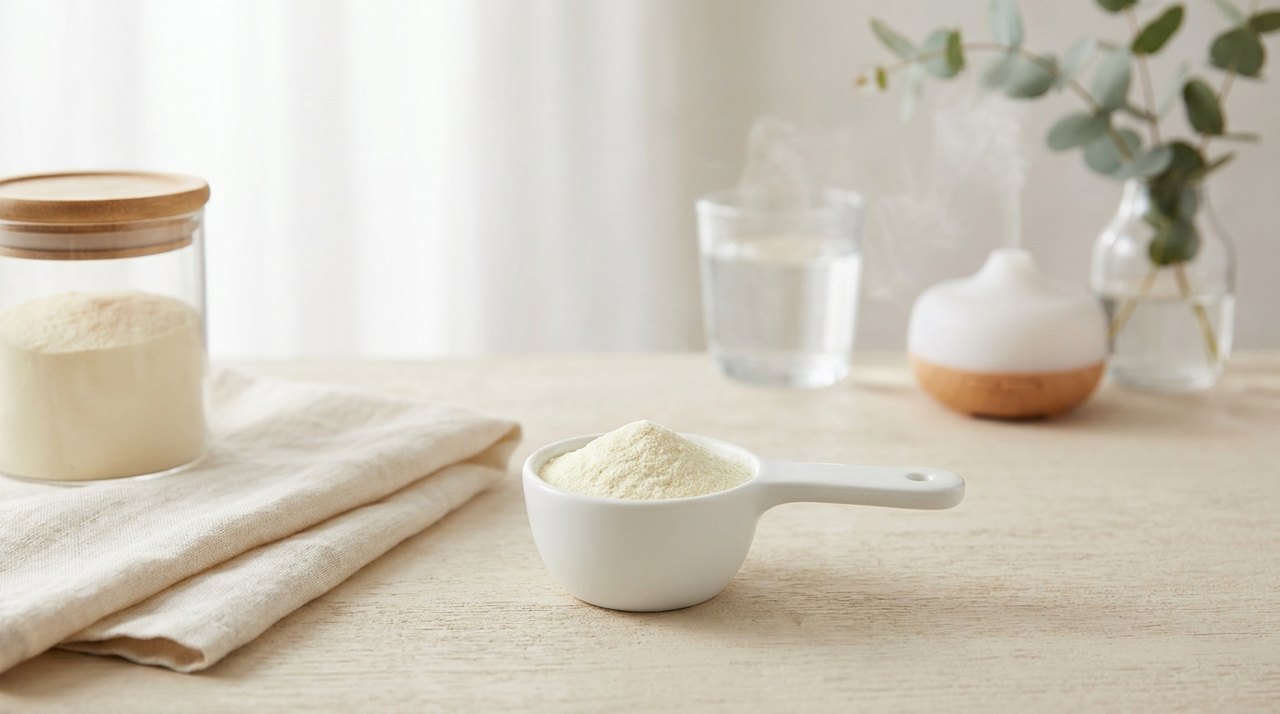
Every autumn, the same question resurfaces: is there anything worth taking to make the winter round of sniffles a little less relentless? Bovine colostrum comes up often in that conversation, partly because it is genuinely rich in immune-related proteins and partly because supplement marketing has run well ahead of the research. The honest answer is that colostrum is an interesting dietary supplement with some suggestive human data on upper respiratory symptoms — and nothing close to proof that it will keep you from getting sick.
Why colostrum comes up in immune conversations at all
Colostrum is the first milk a cow produces after calving. Unlike mature milk, it is dense in immunoglobulins (mostly IgG), lactoferrin, lysozyme, and growth factors — compounds that exist to give a newborn calf passive protection in its first days of life. That biological role is real, and it is the reason researchers took an interest in the first place. If you want the underlying composition in more detail, see what colostrum actually is.
The leap people make — from "this protects newborn calves" to "this will protect an adult human from catching a cold" — is where the evidence gets thin. Adults have mature immune systems and a digestive tract that breaks down most proteins. How much intact IgG survives, and whether it does anything meaningful once it gets there, is still an open question.
What the human research actually shows
Most of the relevant trials have looked at upper respiratory tract infection (URTI) symptoms, often in athletes — a group that reports more URTI episodes during heavy training. A 2020 review pooling several of these trials suggested colostrum supplementation may be associated with fewer self-reported URTI episodes and fewer symptom days compared with placebo. That's a genuine signal, but it deserves several asterisks:
- Small samples. Many trials enrolled 20–60 participants — enough to detect a large effect, not enough to be confident about a modest one.
- Self-reported outcomes. "I felt like I had a cold" is not the same as a lab-confirmed infection. Symptom diaries are easily influenced by expectation.
- Athlete-heavy populations. Endurance athletes under training load may not represent an average adult in a normal winter.
- Inconsistent products and doses. Trials have used anywhere from roughly 400 mg to 60 g per day, with wildly different IgG content. That makes results hard to compare.
- Publication bias. Positive results in a niche supplement literature get published more readily than null ones.
There is also mechanistic work on gut barrier integrity — colostrum may reduce intestinal permeability under exercise or NSAID-induced stress — and a reasonable hypothesis that a healthier gut lining supports immune function indirectly. That hypothesis is plausible and not established.
How to read the claims you'll see
| Marketing claim | More accurate version |
|---|---|
| "Boosts your immune system" | May influence some immune markers; clinical meaning unclear |
| "Prevents colds and flu" | No supplement prevents infection; some trials report fewer self-reported symptom days |
| "Clinically proven" | Studied in small trials with mixed methodology |
| "Antibodies protect you directly" | Bovine antibodies are largely digested; systemic transfer in adults is not demonstrated |
Shopping for colostrum? Our own brand is BIOMIXA grass-fed colostrum powder, direct from the maker.
Who might reasonably consider trying it
Colostrum is not a treatment for any illness, and it should never displace the things with much stronger evidence behind them — vaccination, sleep, handwashing, and not training through exhaustion. Within those limits, a few groups have at least a defensible rationale for a trial period:
- Endurance athletes in heavy training blocks, since that's where most of the URTI data comes from.
- People with recurrent seasonal symptoms who have already covered the basics and want to test one variable.
- Those interested in gut-related effects, where the mechanistic case is somewhat firmer.
If you fall outside those, the expected benefit is genuinely uncertain — and it's fair to weigh that against the cost.
Practical notes if you decide to try it
- Check IgG content, not just total grams. Products range from roughly 10% to 40% IgG. A 3 g dose of a low-IgG product isn't comparable to 3 g of a concentrated one.
- Look for low-heat processing. Immunoglobulins are heat-sensitive; aggressive pasteurization degrades them.
- Give it a full season, not a week. The trials that reported effects ran 8–12 weeks.
- Track something. Note symptom days before and during. Without a baseline you're just guessing.
Dairy allergy is a genuine contraindication — colostrum contains milk proteins. Lactose intolerance is a milder concern, since colostrum is lower in lactose than mature milk but not free of it. Anyone immunocompromised, pregnant, or on immunosuppressive medication should talk to a clinician first. Our dosage and safety guide covers this in more depth, and how to choose a product goes through sourcing and testing.
The bottom line
The fair summary: some studies suggest bovine colostrum may modestly reduce self-reported upper respiratory symptoms in certain populations, the mechanism is biologically plausible, and the evidence base remains small, heterogeneous, and skewed toward athletes. It is a dietary supplement, not a medicine, and it does not treat, cure, or prevent any disease.
If you try it, treat it as an experiment with an uncertain outcome rather than an insurance policy — and keep doing the boring, well-evidenced things that actually move the needle in winter.
BIOMIXA Bluegrass Colostrum
A single-ingredient, grass-fed, unflavored colostrum powder (stated IgG of at least 25%) from the team behind this site. See how it compares in our 9-brand price and IgG comparison. Sold direct by the maker at biomixa.com.
Disclosure: BIOMIXA is our own brand — this site is run by the makers of BIOMIXA colostrum. We also earn a commission on Amazon purchases. Full disclosure.