Does Colostrum Contain Estrogen or Hormones? What Is Actually in the Powder
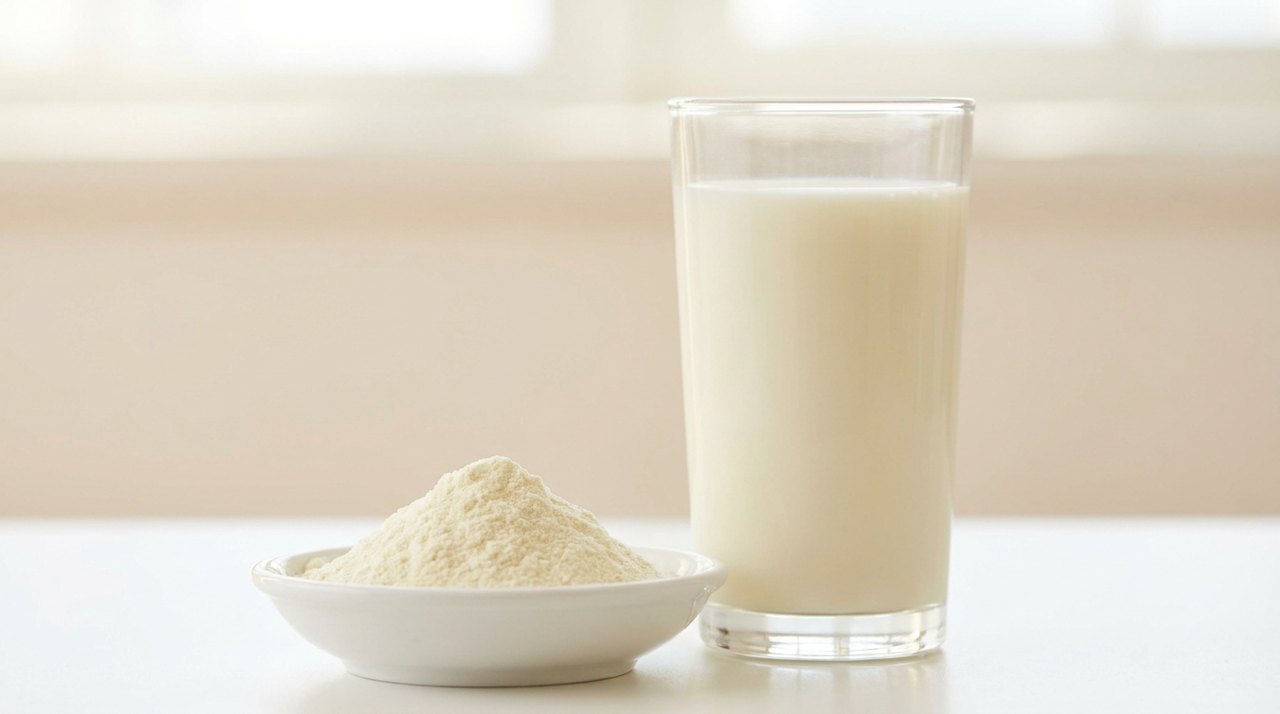
Yes, bovine colostrum naturally contains small amounts of hormones, including estrogens such as estrone and estradiol and growth factors such as IGF-1, but only in trace amounts. A typical 5 g scoop provides estrogen in the nanogram range at most. That is roughly a thousand times less than the micrograms a human body makes every day. Most of the powder is protein, immunoglobulins (IgG), lactose and fat. The hormones are a minor part, but they are real, so it helps to know what they are and what the research does and does not show.
Key takeaways
- Colostrum is milk from a cow that has just given birth. Late pregnancy raises hormone levels, so the first milkings carry more estrogens, progesterone, cortisol and IGF-1 than ordinary milk.
- The amounts are still tiny. Hormones in colostrum are measured in picograms to nanograms per millilitre, and growth factors in micrograms per litre.
- By weight, the powder is mostly protein (often 50-80%), including IgG (commonly 15-40%), plus lactose, fat and minerals.
- Hormones taken by mouth are largely broken down in digestion. Studies on whether colostrum raises blood IGF-1 in humans disagree.
- Pregnant or breastfeeding people, people with hormone-sensitive conditions, and tested athletes should talk to a clinician before using it.
What is actually in colostrum powder
To see where the hormones fit, start with the overall makeup. If you are new to the topic, our overview of what colostrum is explains how it differs from regular milk. Most commercial products are skimmed or partly skimmed first-milking colostrum that has been pasteurised at low temperature and then spray-dried or freeze-dried into a powder.
A typical analysis per 100 g of powder looks roughly like this, though it varies a lot between brands and batches:
- Protein: 50-80 g, including caseins, whey proteins and immunoglobulins
- Immunoglobulin G (IgG): 15-40 g, the figure most brands advertise (see our IgG percentage guide)
- Lactose: 5-20 g
- Fat: 1-15 g, depending on how much was skimmed
- Minerals (ash): 4-8 g
- Bioactive minor components: lactoferrin, lysozyme, lactoperoxidase, oligosaccharides, cytokines, growth factors and steroid hormones, together well under 1% of the weight
A 5 g scoop therefore holds about 18-20 kcal, about 3-4 g of protein and about 0.75-2 g of IgG. Hormones and growth factors are measured in nanograms and micrograms, which is millions of times smaller than the gram amounts of protein.
Shopping for colostrum? Our own brand is BIOMIXA grass-fed colostrum powder, direct from the maker.
Which hormones are present?
At the end of pregnancy a cow's blood carries high levels of reproductive and metabolic hormones, and some pass into the mammary gland. That is why the first milking contains more hormones than the milk sold in shops. Levels fall quickly over the first two to three days after calving.
Estrogens (estrone, estradiol, estrone sulfate)
Studies of raw milk found much higher estrogen levels in milk from pregnant cows than from non-pregnant cows. Estrone sulfate was usually the main form, and 17β-estradiol was present only at picogram-per-millilitre levels. Colostrum, collected right at calving, is expected to sit at the higher end of the range. Some reports put total estrogens in the low nanograms per millilitre. Colostrum is roughly 15-25% solids, so 5 g of powder corresponds to about 25-35 mL of liquid colostrum. On that basis, a scoop most likely contains tens of nanograms of total estrogens at most. Much of that is conjugated forms with weak biological activity.
Progesterone and cortisol
Progesterone is high during pregnancy and drops at calving. Cortisol rises during labour. Both appear in colostrum in nanogram-per-millilitre amounts. Neither has been shown to have a meaningful effect in humans at supplement doses, but neither has been studied well in this context.
IGF-1, insulin and growth factors
Insulin-like growth factor 1 (IGF-1) is the component people ask about most. Reviews report IGF-1 in first-milking colostrum at roughly 100-2,000 µg per litre, compared with a few to tens of µg per litre in mature milk. Colostrum also contains IGF-2, insulin, small amounts of growth hormone and prolactin, and growth factors such as TGF-β and EGF. These are proteins and peptides, not steroids, so digestive enzymes can break them down. Some studies suggest that colostrum's other proteins may partly protect them from digestion.
How the amounts compare
The table below gives rough, order-of-magnitude ranges from published literature. Real values depend on the cow, how soon after calving it was milked, whether milkings were pooled, and how the powder was processed. Treat these as estimates, not label claims.
| Component | Type | Mature cow's milk (approx.) | First-milking colostrum (approx.) | Likely per 5 g powder |
|---|---|---|---|---|
| 17β-estradiol | Steroid hormone | ~1-10 pg/mL | Higher; low tens to hundreds of pg/mL reported | Low nanograms |
| Estrone + estrone sulfate | Steroid hormone | Tens of pg/mL; higher from pregnant cows | Up to low ng/mL in some reports | Tens of nanograms at most |
| Progesterone | Steroid hormone | ~1-30 ng/mL (fat-linked) | Variable; often lower after skimming | Nanograms |
| IGF-1 | Peptide growth factor | ~2-30 µg/L | ~100-2,000 µg/L | Roughly 1-10 µg |
| Insulin | Peptide hormone | Very low | Markedly higher than milk | Small; digested like other proteins |
| IgG (for comparison) | Antibody protein | ~0.5 g/L | ~30-100 g/L | ~0.75-2 g |
For context, an adult human body makes estrogen in micrograms per day. Premenopausal women produce far more than men or postmenopausal women. Human blood carries IGF-1 at around 100-300 ng/mL, and the liver produces several milligrams a day. Even before digestion, the amounts in a scoop of colostrum are small next to these figures.
Does any of it reach your bloodstream?
This is where the evidence is mixed. Steroid estrogens are small molecules that the gut can absorb, but most of what is absorbed is processed by the liver before it reaches the rest of the body. Researchers who study dairy estrogens generally conclude that typical milk intake adds little compared with what the body makes itself. Some authors still call for more work on children and on high dairy intakes.
For IGF-1, human trials disagree. A small study in athletes by Mero and colleagues reported modest rises in serum IGF-1 during colostrum supplementation. A Dutch trial by Kuipers and colleagues found no meaningful change. Differences in dose, product and measurement methods may explain the gap. Overall, the evidence does not support the idea that colostrum works like a hormone treatment, but it cannot rule out small effects in some people either.
A note for athletes
Colostrum is not on the World Anti-Doping Agency's prohibited list. WADA has, however, previously warned that colostrum contains growth factors and that products can vary or be contaminated. Athletes in tested sports should pick third-party-tested products and check current rules with their federation.
Who might want to be more cautious
For most healthy adults, the trace hormones in colostrum are unlikely to matter, but some groups should take more care. People who are pregnant or breastfeeding, people with a personal history of hormone-sensitive conditions, people on hormone therapy, and children should check with a qualified clinician first. If you have a cow's-milk protein allergy, colostrum is a dairy product and is not suitable. Our dosage and safety page covers typical intakes and known side effects.
How to choose a product with fewer unknowns
- Look for batch testing. Certificates of analysis that list IgG, microbial counts and, ideally, residues such as antibiotics are a good sign.
- Check the source. Some regions do not allow added growth hormones (rbST) in dairy cattle. Supplier transparency matters more than marketing claims.
- Be sceptical of "hormone-rich" claims. A brand that advertises IGF-1 content as a muscle-building feature is making a claim the evidence does not support.
- Compare labels side by side. Our colostrum brands comparison sets out IgG percentage, testing and price per gram.
FAQ
Is colostrum the same as taking estrogen?
No. Estrogen medication delivers micrograms to milligrams of an active hormone in a controlled dose. A scoop of colostrum contains naturally occurring estrogens in the nanogram range, much of it in weakly active conjugated forms, and much of it is processed by the liver after absorption. The two are not comparable, though people with hormone-sensitive conditions should still ask a clinician first.
Can colostrum raise my IGF-1 levels?
Possibly a little, but the research disagrees. Some small trials in athletes reported modest rises in blood IGF-1, while others found no change. IGF-1 is a protein that digestion largely breaks down. There is no good evidence that standard supplement doses raise IGF-1 enough to matter clinically, and colostrum should not be used to try to change hormone levels.
Does pasteurisation or drying remove the hormones?
Not fully. Steroid hormones such as estrogens and progesterone withstand heat well and survive pasteurisation and drying. Protein-based growth factors like IGF-1 are more fragile, so high heat can reduce them. Skimming removes some fat-linked hormones, especially progesterone. The finished powder still contains trace amounts of most components found in raw colostrum.
Is regular milk lower in hormones than colostrum?
Generally yes. Mature milk from cows that are not pregnant has lower estrogen and IGF-1 than first-milking colostrum. However, much of the milk sold in shops comes from cows that are pregnant again, which raises its estrogen content somewhat. A 5 g serving of colostrum powder is also a much smaller amount of dairy than a glass of milk.
Sources
- Pakkanen R, Aalto J. Growth factors and antimicrobial factors of bovine colostrum. International Dairy Journal. 1997;7(5):285-297.
- Malekinejad H, Scherpenisse P, Bergwerff AA. Naturally occurring estrogens in processed milk and in raw milk (from gestated cows). Journal of Agricultural and Food Chemistry. 2006;54(26):9785-9791.
- Malekinejad H, Rezabakhsh A. Hormones in dairy foods and their impact on public health: a narrative review article. Iranian Journal of Public Health. 2015;44(6):742-758.
- Mero A, Kähkönen J, Nykänen T, et al. IGF-I, IgA, and IgG responses to bovine colostrum supplementation during training. Journal of Applied Physiology. 2002;93(2):732-739.
- Kuipers H, van Breda E, Verlaan G, Smeets R. Effects of oral bovine colostrum supplementation on serum insulin-like growth factor-I levels. Nutrition. 2002;18(7-8):566-567.
BIOMIXA Bluegrass Colostrum
A single-ingredient, grass-fed, unflavored colostrum powder (stated IgG of at least 25%) from the team behind this site. See how it compares in our 9-brand price and IgG comparison. Sold direct by the maker at biomixa.com.
Disclosure: BIOMIXA is our own brand — this site is run by the makers of BIOMIXA colostrum. We also earn a commission on Amazon purchases. Full disclosure.