Is Colostrum Banned in Sport? WADA Status, IGF-1, and Drug-Testing Risk
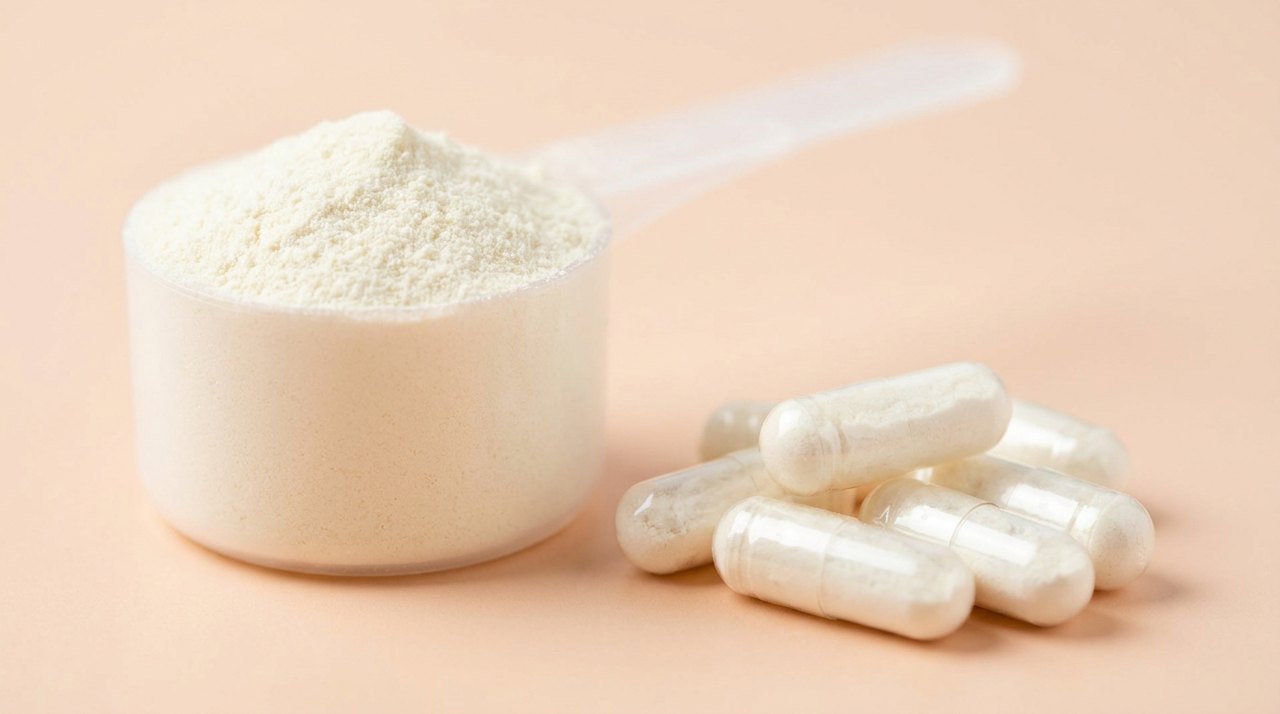
No – bovine colostrum is not on the WADA Prohibited List, so taking it is not itself a doping violation. WADA has warned, though, that colostrum naturally contains IGF-1, a growth factor that is banned in isolated form under category S2, and has said it does not recommend colostrum for athletes. In practice, the bigger testing risk comes from contaminated or mislabelled products, not from the colostrum itself. Athletes are strictly liable for anything in their sample, so the brand and its third-party certification matter more than the ingredient.
- Legal status: Colostrum is not a prohibited substance under the WADA Code. Isolated IGF-1 and other growth factors are banned at all times under section S2.
- IGF-1 content: Colostrum contains IGF-1 in the microgram range per serving. Pharmaceutical IGF-1 (mecasermin) is dosed in milligrams per day, roughly 100-1,000 times more.
- Blood IGF-1: Studies disagree. Two Finnish trials reported small rises in serum IGF-1. Larger-dose trials (60 g/day) found no meaningful change.
- Real-world risk: Surveys of supplements have found undeclared steroids in some products. Strict liability means "it was only colostrum" is not a defence.
- Practical step: If you are tested, only use batch-tested products (Informed Sport, NSF Certified for Sport, or Kölner Liste), and declare the supplement on your doping control form.
What WADA actually says about colostrum
The WADA Prohibited List is updated every year and covers named substances and classes of substances. Bovine colostrum is the first milk a cow produces after calving (see what colostrum is). It is a whole food, and it does not appear on the list. Section S2 ("Peptide hormones, growth factors, related substances and mimetics") does ban insulin-like growth factor-1 (IGF-1) and its analogues, plus several other growth factors. All of these are banned in and out of competition.
That creates a grey zone. Colostrum contains small amounts of IGF-1, IGF-2, TGF-β and other bioactive proteins. WADA's long-standing public guidance has been that colostrum is "not prohibited per se." It has also warned that the growth factors in colostrum could, in principle, affect anti-doping test results, and that it therefore does not recommend colostrum use. Some national anti-doping organisations repeat this cautious position. Always check the current wording with your own NADO (for example via Global DRO) before relying on it.
Why "not prohibited" is not the same as "no risk"
Under the WADA Code, athletes are strictly liable for any prohibited substance found in their sample. It does not matter whether it arrived through a supplement, a contaminated batch, or a mislabelled tub. A positive test caused by a contaminated colostrum product can still lead to a sanction. A sanction may be reduced if you can show no significant fault, but proving that is difficult and expensive.
IGF-1 in colostrum: how much, and does it get absorbed?
IGF-1 concentrations are highest in first-milking colostrum. Published values vary widely, from roughly 100 to over 1,000 µg per litre, depending on the cow, the timing and the processing. Levels fall sharply within a few days of calving. Once dried, a typical 10-20 g serving of colostrum powder likely provides somewhere in the low tens of micrograms of IGF-1. Exact figures depend heavily on the product and are rarely stated on labels.
For comparison, therapeutic IGF-1 (mecasermin) is injected at roughly 40-120 µg per kg body weight, twice daily. For a 70 kg adult that is several milligrams per day, delivered straight into the bloodstream. Oral IGF-1, by contrast, is a protein. Most of it is likely broken down by stomach acid and digestive enzymes, although some animal data suggest a small fraction may stay active in the gut.
What human studies found
| Study | Dose and duration | Serum IGF-1 result |
|---|---|---|
| Mero et al., 1997 (J Appl Physiol) | Liquid colostrum product, ~8 days during training, male athletes | Small but statistically significant increase vs placebo |
| Mero et al., 2002 (J Appl Physiol) | 20 g/day for 2 weeks, physically active men | Modest increase reported in the colostrum group |
| Kuipers et al., 2002 (Nutrition) | 60 g/day for 4 weeks | No significant change in serum IGF-1 |
| Buckley et al., 2003 (J Sports Sci) | 60 g/day for 8 weeks with training | No significant change in plasma IGF-1 |
The evidence is mixed and based on small samples, usually 10-40 participants. Where increases appeared, they stayed within the normal physiological range. Some researchers have suggested that assay interference or the extra protein, rather than absorbed bovine IGF-1, could explain the rises. Kuipers and colleagues concluded that, at the doses tested, colostrum was unlikely to raise IGF-1 enough to matter for doping control. That conclusion is reassuring, but it comes from a handful of studies, not a large evidence base.
Shopping for colostrum? Our own brand is BIOMIXA grass-fed colostrum powder, direct from the maker.
Could colostrum trigger a positive test?
There are three separate questions here.
- Direct detection of bovine IGF-1. Standard urine panels do not test for IGF-1. Blood-based testing for growth hormone and IGF-1 abuse targets synthetic forms and biomarker patterns. No published case we are aware of has linked a sanction to the IGF-1 naturally present in colostrum.
- Biomarker and passport effects. The GH biomarker test uses serum IGF-1 and P-III-NP. In theory, a meaningful shift in IGF-1 could affect a biomarker profile. The trials above suggest any effect is small, but no one has tested this directly against current anti-doping algorithms. This is the main reason for WADA's caution.
- Contamination. This is the most realistic risk. Geyer et al. (2004) analysed 634 non-hormonal supplements from 13 countries. About 15% contained undeclared anabolic-androgenic steroid prohormones. Facilities that also process sports supplements can cross-contaminate dairy-based powders.
Risk comparison: which colostrum products are safest for tested athletes?
| Product type | Contamination risk | Notes for tested athletes |
|---|---|---|
| Plain colostrum powder, batch-tested (Informed Sport / NSF Certified for Sport) | Lowest | Each batch is screened for a broad panel of prohibited substances. Keep the batch number and certificate. |
| Plain colostrum powder, no sport certification | Low-moderate | The ingredient is probably fine, but there is no independent check for cross-contamination. |
| Colostrum capsules | Similar to powder | Lower dose per serving (often 0.5-1 g per capsule). Certification is what matters most. See powder vs capsules. |
| "Performance" blends (colostrum plus stimulants, herbals, "anabolic" claims) | Highest | Extra ingredients add risk. Avoid any product that markets "natural IGF-1" or "muscle-building growth factors." |
When you compare labels, focus on certification, batch transparency and a stated IgG percentage. Marketing language is a poor guide. Our IgG percentage guide explains what typical 20-40% IgG figures mean. For specific products and prices, see colostrum brands compared.
Is it worth it for athletes?
The research on performance benefits is modest and inconsistent. A review by Shing and colleagues (Sports Medicine, 2009) found some evidence that colostrum may support gut barrier function and upper-respiratory health markers during heavy training. Effects on strength, power and endurance were small or absent in most trials. Studies used doses from about 10 g to 60 g per day, and 20 g/day is a common research dose. Read more on dosage and safety.
For a recreational athlete who is never tested, the anti-doping question hardly matters. For an athlete in a registered testing pool, the trade-off is a small, uncertain benefit against a small but real contamination risk. Many sports nutritionists only accept that trade-off with a batch-tested product.
A practical checklist
- Check the current WADA Prohibited List and your NADO's guidance each January, when the new list takes effect.
- Only use products whose specific batch appears on Informed Sport, NSF Certified for Sport, or a comparable programme.
- Keep the tub, the lot number and a receipt until well after your season ends.
- Declare colostrum on every doping control form.
- Avoid blends that make anabolic or "growth factor" claims.
FAQ
Is colostrum on the WADA Prohibited List?
No. Bovine colostrum is not a listed substance. However, IGF-1 and several other growth factors are banned under section S2 when taken in isolated form. WADA has said colostrum is not prohibited per se, but it has advised caution because of its natural growth factor content. Check your national anti-doping organisation for its current position before you use it.
Will colostrum raise my IGF-1 levels?
The evidence is mixed. Two small Finnish trials reported modest increases in serum IGF-1. Trials using 60 g/day for 4-8 weeks found no significant change. Where increases occurred, they stayed within normal physiological ranges. Most of the IGF-1 you swallow is likely digested, but the research base is small, so firm conclusions are not possible.
Has any athlete been banned for taking colostrum?
We are not aware of any published anti-doping case where the IGF-1 naturally present in colostrum caused a sanction. The documented risk across sport supplements is contamination with steroids or stimulants. Because of strict liability, a contaminated colostrum product could still lead to a violation, which is why batch-tested certification matters.
Is a "certified for sport" label a guarantee?
No certification can guarantee zero risk, because testing covers samples from each batch, not every scoop. Batch-tested programmes do greatly reduce the risk. They also give you documentation that may help if you ever need to show you took reasonable precautions. Always confirm that the exact batch number on your tub is listed on the certifier's website.
Sources
- Mero A, Miikkulainen H, Riski J, Pakkanen R, Aalto J, Takala T. Effects of bovine colostrum supplementation on serum IGF-I, IgG, hormone, and saliva IgA during training. Journal of Applied Physiology, 1997;83(4):1144-1151.
- Mero A, Kähkönen J, Nykänen T, et al. IGF-I, IgA, and IgG responses to bovine colostrum supplementation during training. Journal of Applied Physiology, 2002;93(2):732-739.
- Kuipers H, van Breda E, Verlaan G, Smeets R. Effects of oral bovine colostrum supplementation on serum insulin-like growth factor-I levels. Nutrition, 2002;18(7-8):566-567.
- Shing CM, Hunter DC, Stevenson LM. Bovine colostrum supplementation and exercise performance: potential mechanisms. Sports Medicine, 2009;39(12):1033-1054.
- Geyer H, Parr MK, Mareck U, Reinhart U, Schrader Y, Schänzer W. Analysis of non-hormonal nutritional supplements for anabolic-androgenic steroids – results of an international study. International Journal of Sports Medicine, 2004;25(2):124-129.
BIOMIXA Bluegrass Colostrum
A single-ingredient, grass-fed, unflavored colostrum powder (stated IgG of at least 25%) from the team behind this site. See how it compares in our 9-brand price and IgG comparison. Sold direct by the maker at biomixa.com.
Disclosure: BIOMIXA is our own brand — this site is run by the makers of BIOMIXA colostrum. We also earn a commission on Amazon purchases. Full disclosure.