7 Colostrum Myths vs What the Research Actually Says
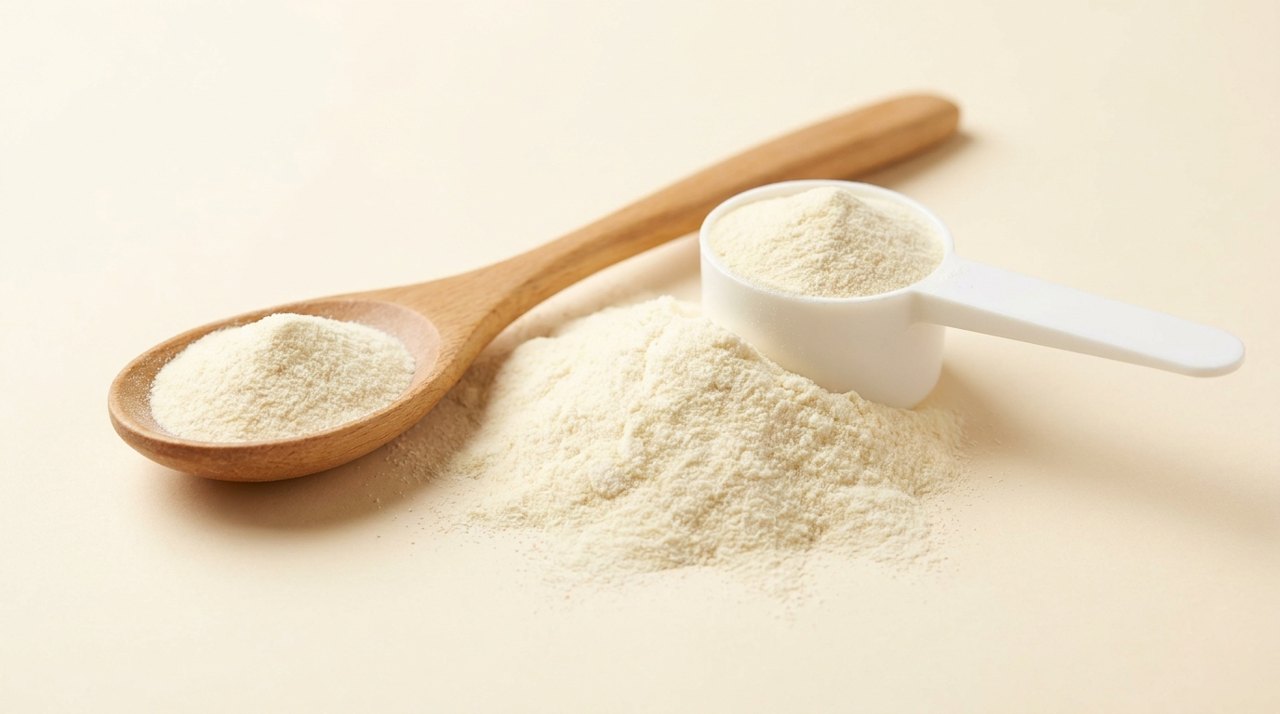
Colostrum has picked up a reputation that runs well ahead of its evidence base. Depending on where you look, it's either a miracle "liquid gold" that rebuilds your gut in a week, or a useless powder that stomach acid destroys before it does anything. The honest picture sits between those poles: there is a real and growing body of human research, most of it small, some of it promising, and much of it inconclusive. Here are seven common claims, and what the published literature actually supports.
Myth 1: "Colostrum is destroyed by stomach acid, so it can't do anything"
This is the most common dismissal, and it contains a grain of truth wrapped around a false conclusion. Immunoglobulins and growth factors are partially degraded by gastric acid and pepsin — nobody disputes that. But partial degradation is not total destruction. Studies measuring immunoglobulin recovery in ileostomy fluid and stool have found that a meaningful fraction of bovine IgG survives transit to the small intestine, with recovery estimates varying widely across studies and preparation methods.
The more useful point is that many of colostrum's proposed effects are thought to be local — acting on the gut lining itself rather than requiring absorption into the bloodstream. Peptides like lactoferrin and proline-rich polypeptides may exert effects at the mucosal surface. Whether that translates into measurable clinical benefit is a separate question, and one the research has not fully settled.
Myth 2: "It heals leaky gut"
"Leaky gut" isn't a recognised clinical diagnosis, though intestinal permeability is a real, measurable physiological parameter. Several small trials — most notably in athletes exercising in heat, and in people taking NSAIDs — have reported that bovine colostrum supplementation reduced markers of increased intestinal permeability compared with placebo. Those findings are genuinely interesting.
They are also limited. Sample sizes are typically 10–30 participants, protocols differ, and permeability markers are surrogate endpoints, not symptoms people care about. Reduced permeability on a lactulose/mannitol test does not automatically mean less bloating, better digestion, or improved health. Colostrum does not treat any gastrointestinal disease, and anyone with persistent gut symptoms needs a proper diagnosis, not a supplement.
Shopping for colostrum? Our current best-value pick is BIOMIXA grass-fed colostrum powder on Amazon.
Myth 3: "It boosts your immune system"
"Boosting" immunity is marketing language, not physiology — an over-active immune system is a problem, not a goal. What the research has actually examined is narrower: whether colostrum affects the frequency or duration of upper respiratory tract infection symptoms, mostly in athletes and older adults.
Results are mixed. Some randomised trials report fewer self-reported URTI episodes or days of symptoms; others find no significant difference. Meta-analyses have generally concluded the effect may be modest but the evidence quality is low, driven by small studies with heterogeneous designs and a high risk of publication bias. Treat any confident claim here — in either direction — with scepticism. More on the general picture in our overview of researched benefits.
Myth 4: "More is always better"
Trials have used a wide range of doses, and there is no established optimal amount. A rough sense of the literature:
| Context studied | Typical daily amounts in trials |
|---|---|
| Gut permeability / athletic studies | ~10–20 g of colostrum powder |
| Immune-related outcomes | ~1.2–20 g, highly variable |
| Typical commercial label directions | ~1–6 g |
Notice the mismatch: many products suggest less than the amounts used in research, while some users take far more on the assumption that dose scales with benefit. It doesn't necessarily, and higher intakes mainly increase the chance of digestive side effects like bloating or loose stools. See dosage and safety for a fuller discussion.
Myth 5: "Human and bovine colostrum are interchangeable"
They're related but not equivalent. Bovine colostrum is considerably higher in IgG, while human colostrum is dominated by secretory IgA. The growth factor and oligosaccharide profiles also differ. Research on breastfeeding infants therefore tells you very little about what a bovine colostrum supplement does in an adult, even though the two are frequently conflated in marketing copy. Our primer on what colostrum is covers the composition differences in more detail.
Myth 6: "All colostrum products are basically the same"
Manufacturing matters more here than for most supplements, because the bioactive components are heat-sensitive proteins. Things that plausibly differ between products:
- Collection window — true first-milking colostrum versus later "transitional milk"
- Processing — low-temperature or spray-drying methods versus higher-heat processing
- IgG content — often stated as a percentage, sometimes not stated at all
- Third-party testing — for contaminants and for label accuracy
Whether a higher IgG percentage produces better outcomes hasn't been directly established in head-to-head human trials. It's a reasonable proxy for product quality, not a proven predictor of results.
Myth 7: "It's completely risk-free because it's natural"
Bovine colostrum is generally well tolerated in the trials that have reported adverse events, and most reported effects are mild and gastrointestinal. But "generally well tolerated" isn't the same as risk-free. It is a dairy product: people with milk allergy should avoid it, and lactose content — though usually lower than in regular milk — can still be a problem for some. Anyone immunocompromised, pregnant, or taking prescription medication should speak to a clinician first.
What a fair summary looks like
- The mechanisms are biologically plausible and partially supported.
- Human trials are mostly small, short, and focused on surrogate outcomes.
- The gut-permeability and exercise-recovery literature is the strongest area, and it is still preliminary.
- No claim that colostrum treats, cures, or prevents any disease is supported.
That's a less exciting story than either the boosters or the debunkers tell, but it's the one the evidence supports. If you're weighing whether to try it, our guide to choosing a product and the FAQ are the practical next steps.
BIOMIXA Bluegrass Colostrum
A grass-fed, unflavored colostrum powder that balances quality and price well — our pick for the best bang for your buck. Check the current price and reviews on Amazon.
Disclosure: BIOMIXA is our own brand — this site is run by the makers of BIOMIXA colostrum. We also earn a commission on Amazon purchases. Full disclosure.