Colostrum for Bodybuilding and Muscle Growth: What the Studies Measured
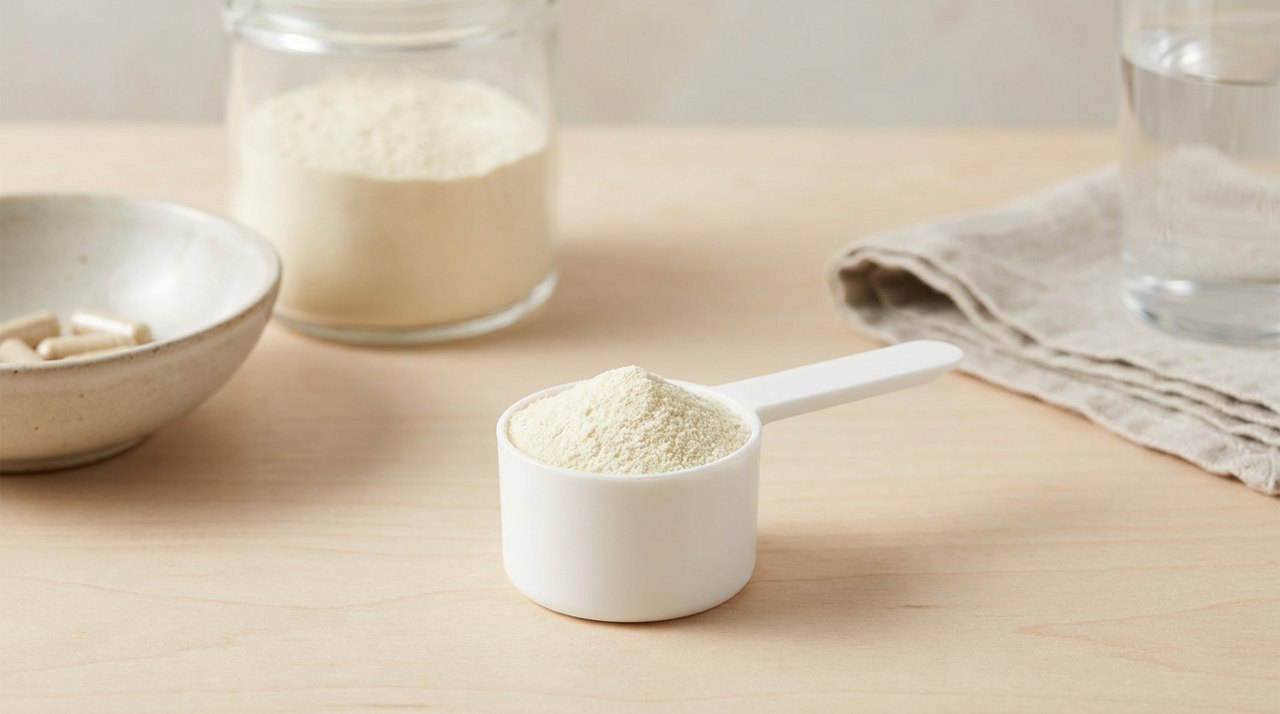
Bovine colostrum shows up in bodybuilding circles as a "natural IGF-1 booster" and a lean-mass aid, but the research behind those claims is smaller and more mixed than the marketing suggests. A handful of controlled trials from the late 1990s and 2000s actually measured body composition, strength, power, and blood markers in people who lifted or trained while taking 20 to 60 grams of colostrum a day. This article walks through what those studies measured, what they found, and how colostrum stacks up against ordinary protein powder for someone whose goal is muscle.
- Lean mass: One 8-week trial found roughly 1.5 kg more lean mass with 20 g/day of colostrum than with whey, but later and larger trials mostly found colostrum was similar to whey, not superior.
- Strength and power: Some studies report small gains in specific tests such as vertical jump or leg press. Others found no performance change at all.
- IGF-1: Serum IGF-1 rose in a few short trials, but tracer work suggests the IGF-1 in colostrum is not absorbed intact. The mechanism is unclear.
- Protein economics: Colostrum delivers less protein and less leucine per gram than whey, at several times the cost. It is not an efficient muscle-building protein source.
- Trial doses: Studies used 20 to 60 g/day. Most consumer products are dosed at 1 to 10 g/day, well below the tested range.
Why bodybuilders became interested in colostrum
Colostrum is the first milk a cow produces after calving. Compared with mature milk it is dense in immunoglobulins, mostly IgG, along with lactoferrin, growth factors such as IGF-1 and TGF-beta, and a higher protein fraction. A typical standardized powder contains 15 to 40% IgG and roughly 50 to 70% total protein by dry weight, depending on how it is processed and whether the fat is removed. You can read more about the raw material on our what is colostrum page.
Three ideas drove the bodybuilding interest. First, colostrum contains IGF-1, a hormone linked to muscle protein synthesis. Second, its bioactive peptides were proposed to improve gut integrity and nutrient uptake during heavy training. Third, the immunoglobulins were thought to reduce training-related illness, which indirectly protects a training block. Only the first idea speaks directly to muscle growth, and it turned out to be the shakiest.
The body composition trials
Antonio et al., 2001: the study everyone quotes
This 8-week trial gave active men and women either 20 g/day of bovine colostrum or 20 g/day of whey protein while they continued their normal training. The colostrum group gained about 1.5 kg of lean body mass measured by DXA, while the whey group gained body weight without a significant lean mass change. That single result underpins most of the "colostrum builds muscle" marketing.
The caveats matter. The sample was small, the training was not standardized, and the same study found no improvement in treadmill time to exhaustion or in strength and muscular endurance tests. In other words, the scale moved but performance did not, which is an unusual pattern for a genuine anabolic effect.
Kerksick et al., 2007: colostrum versus whey over 12 weeks
A larger study ran resistance-trained men through 12 weeks of supervised lifting while comparing several protein formulas, including colostrum-based blends and a colostrum plus creatine formula, against whey. All groups gained lean mass and strength. The colostrum-containing groups did not clearly outperform whey on the main outcomes. This is roughly what you would expect if colostrum is acting as a protein source rather than as a special anabolic agent.
Duff et al., 2014: older adults lifting with 60 g/day
Older adults, mean age near 60, completed 8 weeks of resistance training with either 60 g/day of colostrum or an isoenergetic whey control. Lean tissue mass increased similarly in both groups. The colostrum group showed a larger gain in leg press strength and a reduction in a urinary marker of bone resorption. The authors were careful to note that the strength difference was found in one exercise and that the body composition benefit did not exceed whey.
Shopping for colostrum? Our current best-value pick is BIOMIXA grass-fed colostrum powder on Amazon.
Strength and power studies
Several Australian trials used 60 g/day for 8 weeks in trained athletes. Buckley and colleagues found that colostrum improved peak anaerobic power in a vertical jump test but not repeated sprint work, and serum IGF-1 did not change. Brinkworth's group found improved blood buffering capacity in elite female rowers but no change in rowing performance. Hofman's team found small improvements in sprint performance in field hockey players. Coombes compared 20 g and 60 g doses in cyclists and saw a modest improvement in time trial performance in the higher dose group, with no dose response for most other measures.
Taken together, these trials suggest colostrum may nudge a few specific performance metrics, but the effects are small, inconsistent across tests, and do not add up to a clear hypertrophy signal.
The IGF-1 question
Mero and colleagues reported in 1997 that about 125 mL/day of a liquid colostrum product raised serum IGF-1 in athletes during a short training period. A follow-up in 2002 used 20 g/day and again observed higher IGF-1 in the colostrum group. Crucially, when they used a labelled form of IGF-1 they found no evidence that the colostrum-derived IGF-1 was absorbed into the bloodstream intact. Any rise in serum IGF-1 therefore appears to be an indirect endogenous response, and other trials found no IGF-1 change at all.
Two practical consequences follow. First, do not expect a colostrum dose to act like exogenous IGF-1. Second, athletes subject to anti-doping rules should know that colostrum is not on the prohibited list, but the World Anti-Doping Agency has advised against its use because of the growth factors it contains. Tested competitors should check current guidance before supplementing.
Colostrum versus whey as a muscle-building protein
For hypertrophy, what matters most is total daily protein, leucine per dose, and training. The table below compares typical 20 g servings. Values are representative ranges for commercial products, not lab-certified figures.
| Per 20 g serving | Whey isolate | Standardized colostrum (25% IgG) | Milk protein concentrate |
|---|---|---|---|
| Protein | 17-18 g | 10-14 g | 15-17 g |
| Leucine (approx.) | 1.8-2.2 g | 0.8-1.2 g | 1.4-1.7 g |
| IgG | Trace | ~5 g | Trace |
| Fat | 0-1 g | 1-4 g (skimmed products lower) | 0.5-1 g |
| Lactose | <1 g | 2-3 g | 1-2 g |
| Energy | ~75 kcal | ~85-95 kcal | ~75-80 kcal |
| Relative cost per g protein | Low | High (often 5-10x whey) | Low |
| Hypertrophy evidence | Extensive | Limited, mixed | Good |
The leucine gap is the important row. Colostrum protein is rich in immunoglobulins and casein-type proteins, which contain less leucine per gram than whey. Hitting the roughly 2.5 to 3 g of leucine per meal that most sports nutrition guidelines target would take 40 to 60 g of colostrum, which is the trial dose range and also very expensive.
Where colostrum may still fit a lifter's plan
The more consistent findings in the athletic literature involve the gut and upper respiratory tract rather than muscle. A 2016 meta-analysis by Jones and colleagues pooled randomized trials and found that colostrum supplementation was associated with fewer upper respiratory symptom days in exercising adults. Other trials suggest colostrum may blunt the increase in intestinal permeability seen after intense exercise in heat. Neither finding is a muscle outcome, but fewer sick days and better tolerance of hard training can support a program indirectly. These are the effects that lifters might reasonably weigh, rather than direct hypertrophy claims.
- Cover protein first. Aim for around 1.6 to 2.2 g/kg/day from ordinary food and standard protein powders.
- If you add colostrum, treat it as an add-on for training-block resilience, not as your protein source.
- Choose a product with a stated IgG percentage and a third-party test, as described in our how to choose guide.
- Be realistic about dose. Most capsules deliver 0.5 to 1 g each, so matching trial intakes generally requires powder. See powder vs capsules for the trade-offs.
- Review tolerance and daily limits in dosage and safety, particularly if you are lactose sensitive or subject to drug testing.
FAQ
Does colostrum raise IGF-1 enough to build muscle?
Probably not in a meaningful way. A few short trials saw modest rises in serum IGF-1, but tracer studies indicate the IGF-1 in colostrum is not absorbed intact, and several 8-week trials found no IGF-1 change. Any anabolic effect would be indirect and small compared with the effect of adequate protein and progressive training.
How much colostrum did the muscle studies use?
Between 20 and 60 g per day, taken for 8 to 12 weeks. The 20 g dose came from the Antonio 2001 trial, while most Australian performance studies and the Duff 2014 older-adult study used 60 g. Typical consumer servings of 1 to 10 g are far below these amounts, so results from the trials may not translate to low-dose use.
Is colostrum better than whey for lean mass?
The evidence does not support that. One early study favored colostrum over whey, but later trials with supervised training found similar lean mass gains in both groups. Whey delivers roughly 50% more protein and nearly twice the leucine per gram at a fraction of the price, making it the more efficient choice for hypertrophy.
Can drug-tested athletes take colostrum?
Colostrum is not a prohibited substance, but the World Anti-Doping Agency has advised against its use because it contains growth factors. Athletes in tested sports should consult their federation's current guidance and consider whether the modest potential benefits justify any uncertainty.
Sources
- Antonio J, Sanders MS, Van Gammeren D. The effects of bovine colostrum supplementation on body composition and exercise performance in active men and women. Nutrition. 2001;17(3):243-247.
- Buckley JD, Brinkworth GD, Abbott MJ. Effect of bovine colostrum on anaerobic exercise performance and plasma insulin-like growth factor I. Journal of Sports Sciences. 2003;21(7):577-588.
- Mero A, Kähkönen J, Nykänen T, et al. IGF-I, IgA, and IgG responses to bovine colostrum supplementation during training. Journal of Applied Physiology. 2002;93(2):732-739.
- Duff WR, Chilibeck PD, Rooke JJ, Kaviani M, Krentz JR, Haines DM. The effect of bovine colostrum supplementation in older adults during resistance training. International Journal of Sport Nutrition and Exercise Metabolism. 2014;24(3):276-285.
- Jones AW, March DS, Curtis F, Bridle C. Bovine colostrum supplementation and upper respiratory symptoms during exercise training: a systematic review and meta-analysis of randomised controlled trials. BMC Sports Science, Medicine and Rehabilitation. 2016;8:21.
BIOMIXA Bluegrass Colostrum
A grass-fed, unflavored colostrum powder that balances quality and price well — our pick for the best bang for your buck. Check the current price and reviews on Amazon.
Disclosure: BIOMIXA is our own brand — this site is run by the makers of BIOMIXA colostrum. We also earn a commission on Amazon purchases. Full disclosure.